
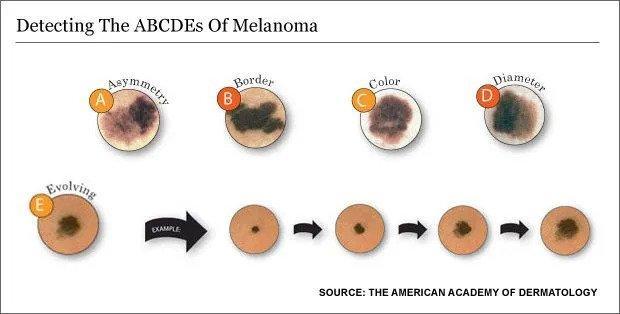
With one in five Americans developing skin cancer in their lifetime, knowing how to spot a potentially cancerous mole is critical. Use the ABCDE method (Asymmetry, Border, Color, Diameter, Evolving) to identify warning signs and know when to see a dermatologist.
Skin cancer is a very real threat for Americans; it's estimated that one out of every five people in the U.S. will develop the disease in their lifetime. As a result of this shocking statistic, it's extremely important that you pay attention to your skin.
Since moles are so common, you should know the difference between a healthy and potentially cancerous mole. The ABCDE method of identifying melanoma is easiest to remember; if any of the following skin problems develop, you should have your dermatologist take a closer look. Atypical moles, also known as dysplastic nevi, are unusual-looking moles that have irregular features under the microscope. Though benign, they are worth more of your attention because individuals with atypical moles are at increased risk for melanoma, a dangerous skin cancer.
An atypical mole can occur anywhere on the body. The appearance of these moles can vary greatly. The best advice is to know your skin. Keep track of any and all moles you may have, to give you the best chance to spot anything new, changing or unusual and bring it to the attention of your dermatologist.
Doing regular check-ups on moles and keeping a look out for atypical moles is essential to keeping your skin healthy. Remember to look at the following ABCDEs:
- Asymmetry: Asymmetrical moles or birthmarks could be caused by abnormal (possibly cancerous) cells. If one part of your mole doesn't match the rest of it, you'll want to see a dermatology specialist.
- Border: The edges of your mole should be smooth and consistent. If you notice that they are irregular, ragged, notched, or blurred, you may be dealing with melanoma.
- Color: Moles don't just come in one color, so the key to this indicator is that the color is consistent. You may see shades of brown or black, sometimes with patches of pink, red, white, or even blue.
- Diameter: Large spots are cause for concern. If your mole is larger than one-quarter inch across (which is about the size of a pencil eraser), you should get it examined by a professional. However, it's important to note that melanomas can sometimes be smaller than this; this is why the other indicators are so crucial.
- Evolving: Moles and birthmarks aren't supposed to change in appearance. Because you were born with them, they should remain the same throughout your life. If you begin to notice that yours is changing in size, shape, or color, it's time to make an appointment.
Dr. Vitaly Blatnoy at the Orlando Dermatology Center specializes in skin cancer surgery and all clinics are equipped with a lab and a surgical suite to perform biopsies and Mohs surgery. Schedule today!
Reviewed by Dr. Vitaly Blatnoy, MD — Board-Certified Dermatologist, Fellow of the American Academy of Dermatology. View credentialsLast reviewed September 11, 2021.
Questions About Your Skin?
Book a visit with our board-certified dermatologists at any of our 4 Central Florida locations.
Book Appointment